P2P vs JOYET: what's the real difference?
P2P trading is how most Nigerians turn crypto into Naira. It works, but it's built for trading, not for paying your bills. Here's how the two compare.
If you hold crypto in Nigeria, you've probably used P2P. You post or pick an offer, a stranger sends you Naira, and you release your coins. Millions of trades happen this way every month.
JOYET does something different. It isn't a place to trade. It's a place to spend.
How P2P works
- You choose a buyer from a list of offers.
- Your crypto is held while the buyer sends Naira to your bank.
- You check your bank app, confirm the money arrived, and release the coins.
- Then you open another app to pay for whatever you needed.
It's flexible, and for big amounts it can make sense. But every step depends on another person.
How JOYET works
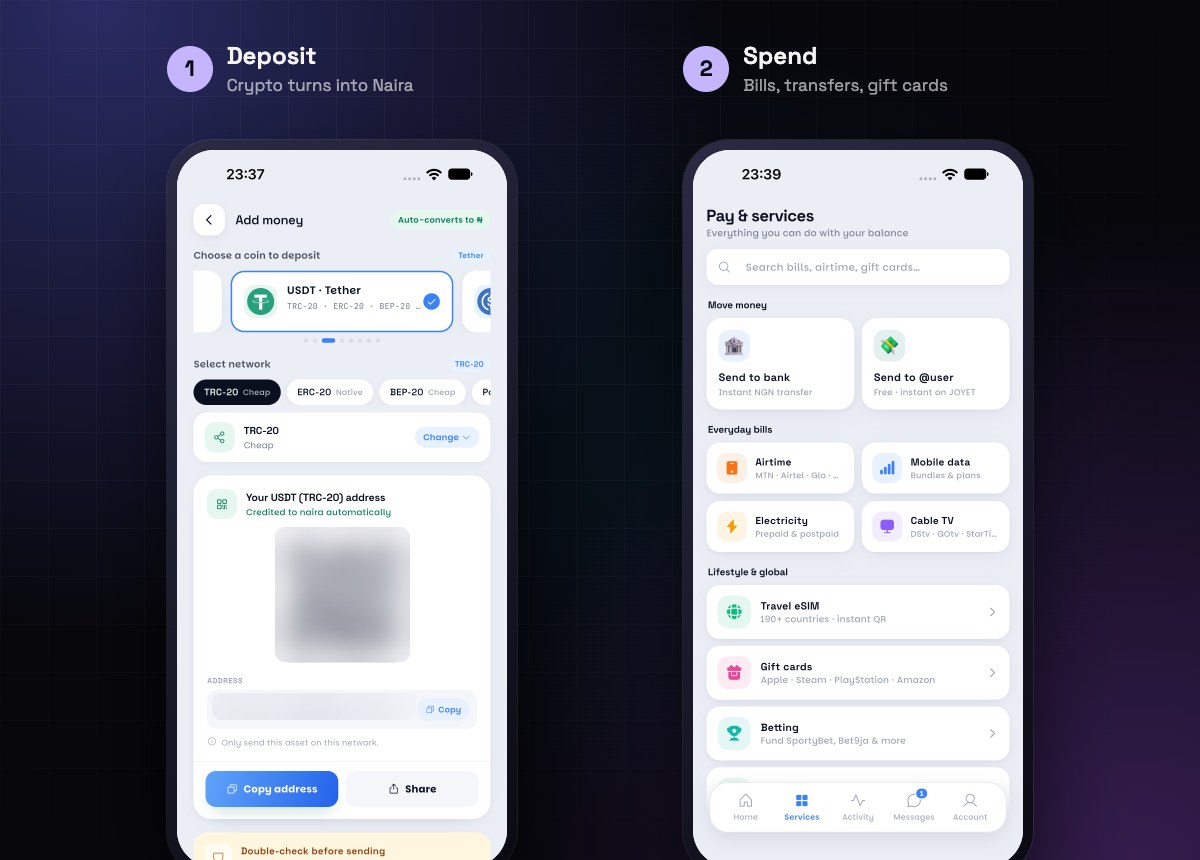
- You deposit crypto to your own JOYET address.
- It converts to Naira at the rate shown in the app.
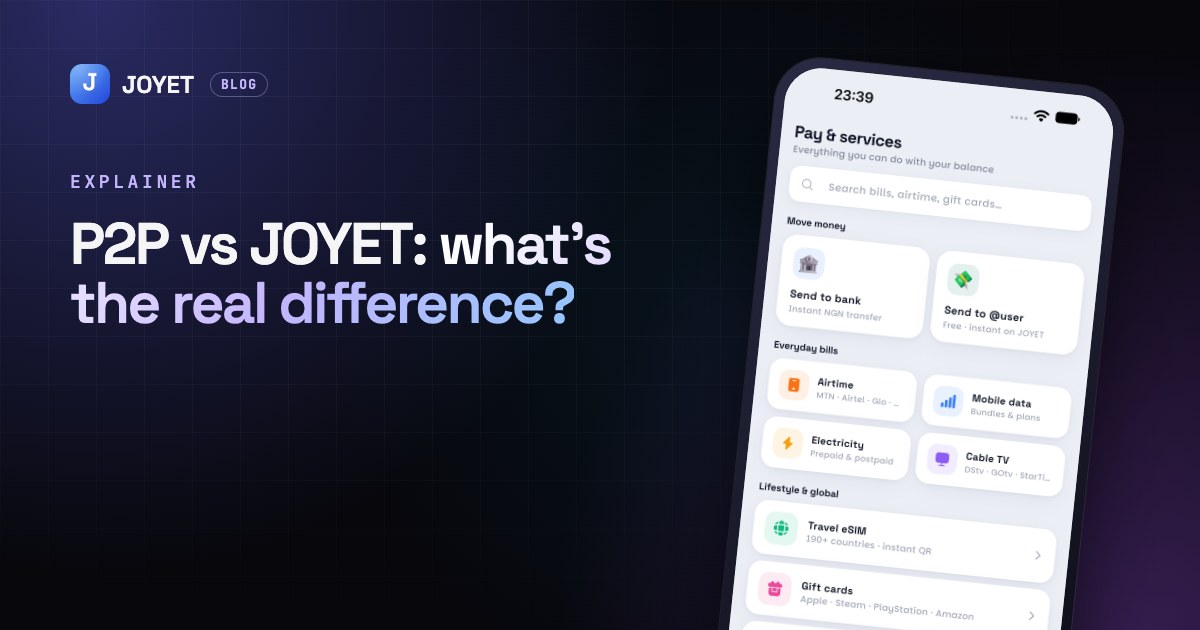
- You spend it right there: bills, airtime, data, transfers.
No buyer, no waiting, no second app.
Side by side
- Who's on the other side? P2P: a stranger. JOYET: nobody. You deal with the app.
- What can go wrong? P2P: slow buyers, fake payment alerts, chargebacks and disputes. JOYET: the main thing to watch is sending on the right network.
- How long does it take? P2P: as long as your buyer takes. JOYET: once your deposit confirms, the Naira is ready to spend.
- What do you do next? P2P: leave the app to pay your bill. JOYET: pay it in the same place.
So which should you use?
If you're trading, or moving a large amount to your bank, P2P may still suit you. If you want to keep the lights on, top up data or send money to a friend without the back-and-forth, JOYET is built for exactly that.
Many people will use both. That's fine. We just think paying a ₦5,000 bill shouldn't need a negotiation.
JOYET is launching on Android and iPhone. Join early access on joyet.site and we'll send you the download link first. Questions? Email hello@joyet.site.