Paid in USDT as a freelancer? Here's how to spend it in Nigeria
Clients abroad pay you in USDT. Your bills are in Naira. Here's a simple way to go from one to the other without the P2P hassle.
If you design, write, code or edit for clients abroad, there's a good chance you're paid in USDT. It's fast, it avoids bank wahala, and it holds its value.
The hard part comes after: turning it into the Naira you need for rent, light and data.
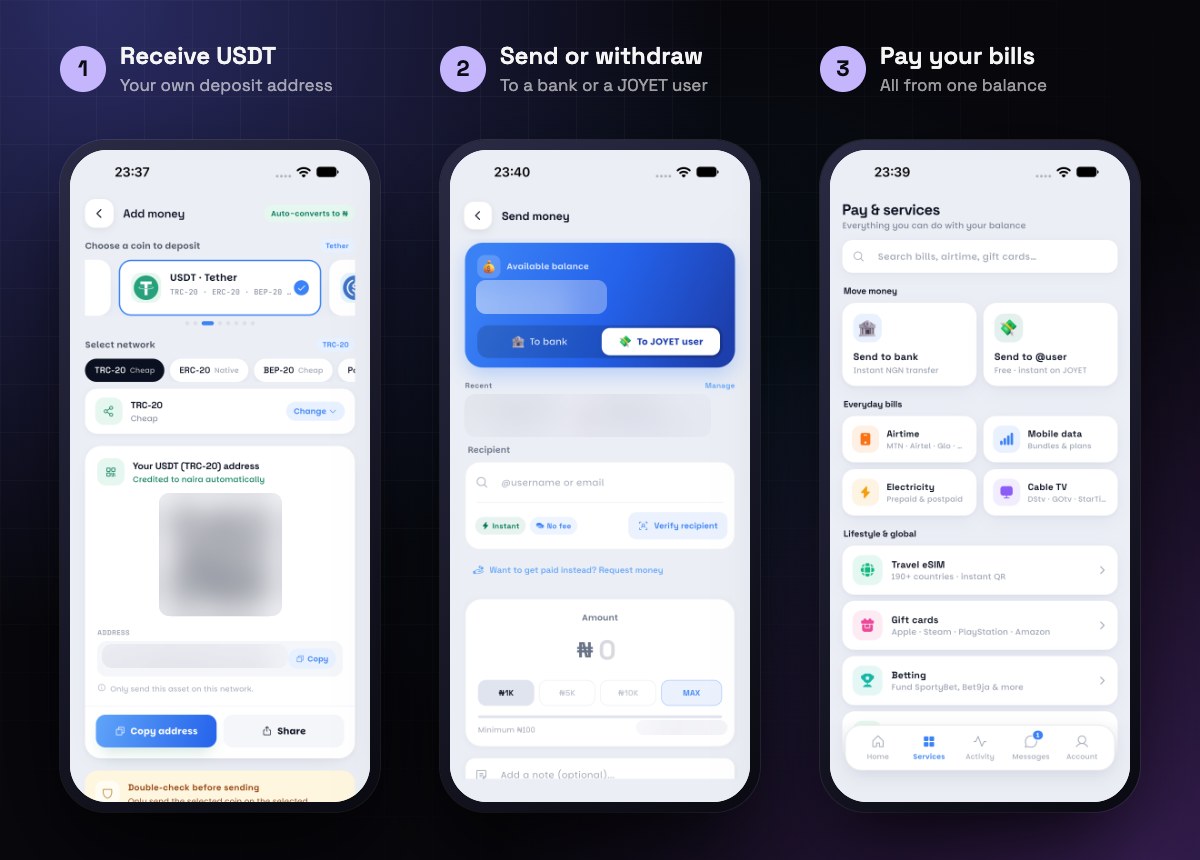
A simple setup
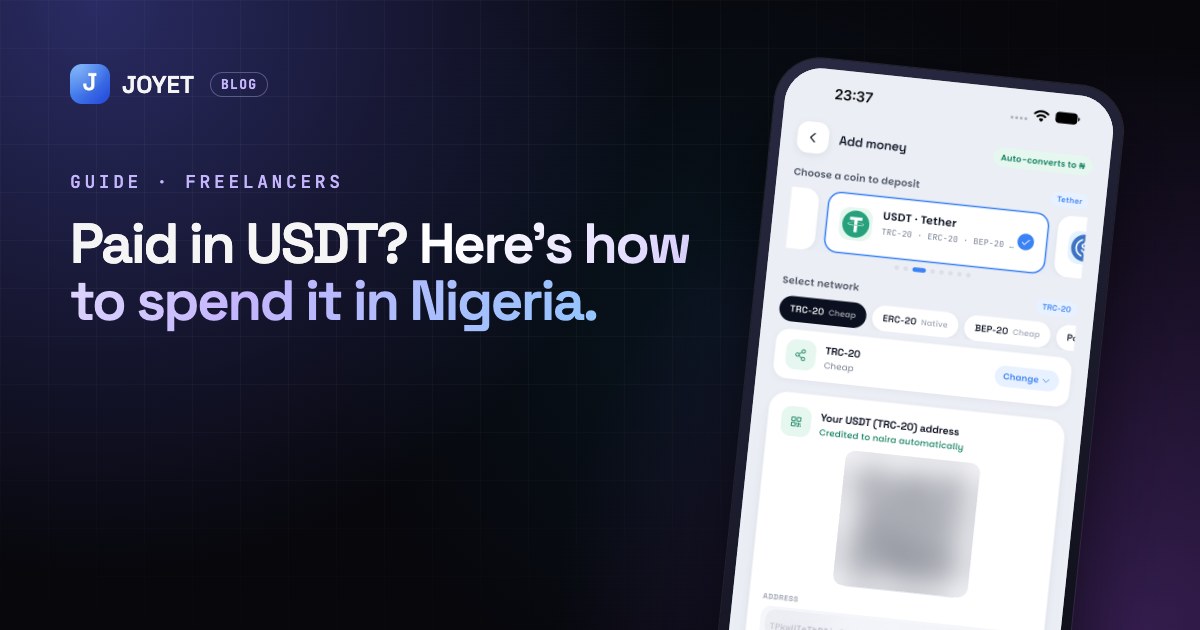
1. Give clients a deposit address. In JOYET, tap Add money, pick USDT and a network your client can send on. Copy the address and share it, together with the network name. Tell clients the network every single time.
2. Let it convert. When the USDT arrives, it converts to Naira in your JOYET balance at the rate shown in the app.
3. Spend it, or move it.
- Pay bills directly: electricity, airtime, data, cable TV.
- Send to your bank: any Nigerian bank account, with the fee shown before you confirm.
- Send to friends on JOYET: free and instant.
Tips from freelancers
- Ask clients to send a small test first when they use a new address or network.
- Cheap networks save you money. TRC-20 and BEP-20 usually cost much less to send on than ERC-20.
- Keep records. Your Activity tab shows every deposit, which helps with invoices and taxes.
- Never share your PIN, even with a client who says they "need it to send payment". They don't.
Getting verified
Higher limits need identity checks. Verify early, so a big client payment doesn't hit a limit on the day it arrives. Our post on KYC explains what's needed and why.
JOYET is launching on Android and iPhone. Join early access on joyet.site and we'll send you the download link first. Questions? Email hello@joyet.site.